October 2026
Articles from Mercy:
- Critical Considerations: How much is too much? (Karen Donahue, RSM)
- USCCB economic letter still guides voters (Rose Marie Tresp, RSM; Institute Justice Team)
- MELF cohort closes by sharing gifts in Dublin (Angie Howard-McParland; Institute Justice Team)
Local Justice News & Upcoming Mercy Events
Justice Resources & Links
Critical Considerations
How much is too much?
Karen Donahue, RSM
Even though the federal government’s fiscal year (FY) 2027 began earlier this month, budget negotiations are still underway. However, the administration’s request for $1.5 trillion (1,500 billion) to fund the Pentagon is unprecedented. This sum represents an increase of almost 50% over the FY26 military budget.
Two recent articles shed light on the military budget and raise serious questions about the nation’s priorities. In a series of three charts, the National Priorities Project at the Institute for Policy Studies shows how the military budget accounts for almost 70% of the federal discretionary budget (funding directly under congressional control). By comparison, only 3.6% goes to education and 5.2% to housing and community development.
Looking at the military budget itself, more than half (52.2%) is allocated for development and purchase of weapons. Only 14% is spent on the troops in the form of pay, benefits and military family housing. The third chart examines where these additional funds ($441 billion) will be appropriated. More than $300 billion will be spent on weapons development and procurement.
A second article posted on the TomDispatch website, looks at the Pentagon’s shadow budget. These are military expenditures buried in the budgets of other government departments and agencies. For example, funding for nuclear weapons is included in the budget for the Department of Energy even though the Department of Defense controls and deploys these weapons.
In this article, political anthropologist, author and retired American University professor David Vine observes that including these military expenditures now outside the formal Department of Defense budget would bring total military spending in FY27 to well over $2 trillion. While these numbers boggle the mind, Vine reminds us that “every single dollar spent on the Pentagon is a dollar not spent on our children, on healthcare, on affordable housing, on efforts to slow catastrophic climate change, and much more.”
He reminds us that “the public needs a full, accurate accounting of the military. Congress could provide an annual True Total Military Budget that tallies all of the Pentagon’s spending in one place and stop hiding funding in other agencies’ budgets. Until this happens, journalists and analysts can help by explaining the full scale of spending and no longer repeating incomplete totals.”
USCCB economic letter still guides voters
Priorities for voters in guiding economic choices by Catholic Social Teaching on the 40th anniversary of the pastoral letter, “Economic Justice For All”
Rose Marie Tresp, RSM; Institute Justice Team
As we prepare to vote in the midterm elections, uncertainty and fear about work and the dignity of workers are prevalent, especially with the increasing use of artificial intelligence in the workplace. Our economic future as individuals and families seems uncertain with the increasing level of inequality in the United States and the world. The wealth gap today is higher than it was in the 1920s prior to the Great Depression.
Forty years ago, the United States Conference of Catholic Bishops (USCCB) published a pastoral letter titled “Economic Justice for All” (EJA). This letter gives us norms and guidance:
The needs of the poor take priority over the desires of the rich; the rights of workers over the maximization of profits; the preservation of the environment over uncontrolled industrial expansion; production to meet social needs over production for military purposes. (EJA paragraph 94)
Many Catholics probably don’t ever remember hearing these words. But these were spoken by Saint John Paul II during his visit to Canada in 1984 and repeated in the USCCB’s pastoral letter two years later.
The bishops’ pastoral letter provides some guidance for citizens today as we prepare to go to the polls. This guidance leaves to each person the responsibility of judging who and what to vote for while understanding that no politician and no laws or regulations perfectly fit these criteria.
In the words of the pastoral letter,
the pursuit of economic justice takes believers into the public arena, testing the policies of government by the principles of our teaching. We ask you to become more informed and active citizens, using your voices and votes to speak for the voiceless, to defend the poor and the vulnerable, and to advance the common good. We are called to shape a constituency of conscience measuring every policy by how it touches the least, the lost, and the left-out among us. This letter calls us to conversion and common action, to new forms of stewardship, service, and citizenship. (EJA paragraph 27)
In 2026, the USCCB again reiterates support for the norms and guidance in this document written 40 years ago. The principles of economic justice articulated by the bishops in 1986 remain just as relevant and necessary today amid persistent poverty, growing inequality, revolutionary technological changes, and the marginalization of many people and communities.
Practically, what does the USCCB support? In brief, when deciding who to vote for, citizens are invited to consider supporting a wide range of issues that could build a just economy. The USCCB names issues and problems that people of faith should recognize and take into account when entering the polling station: “food security and hunger, work and joblessness, homelessness and affordable housing, and tax credits for low-income families, as well as protecting programs that serve poor and vulnerable people throughout the federal budget.”
A summary resource has been published for the fortieth anniversary of Economic Justice for All.
MELF cohort closes by sharing gifts in Dublin
Angie Howard-McParland; Institute Justice Team
The close of summer this year also marked the end of my year-long journey with the Mercy Emerging Leaders Fellowship (MELF) as we presented our final projects and graduated at the house on Baggot Street in Dublin, Ireland. Even as I continue to reflect and discern how I can best share the gifts I received, I know that no articles or webinars will quite capture the grace of this experience. But anyone who has been able to connect with the broader Mercy world across international borders and cultures knows that it changes your work and ministry going forward with new perspectives and appreciation.
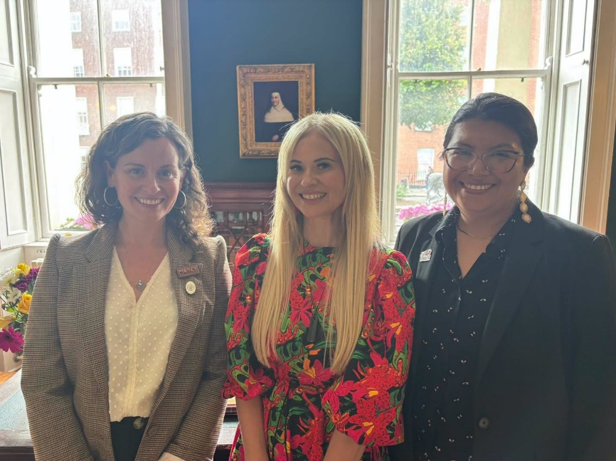
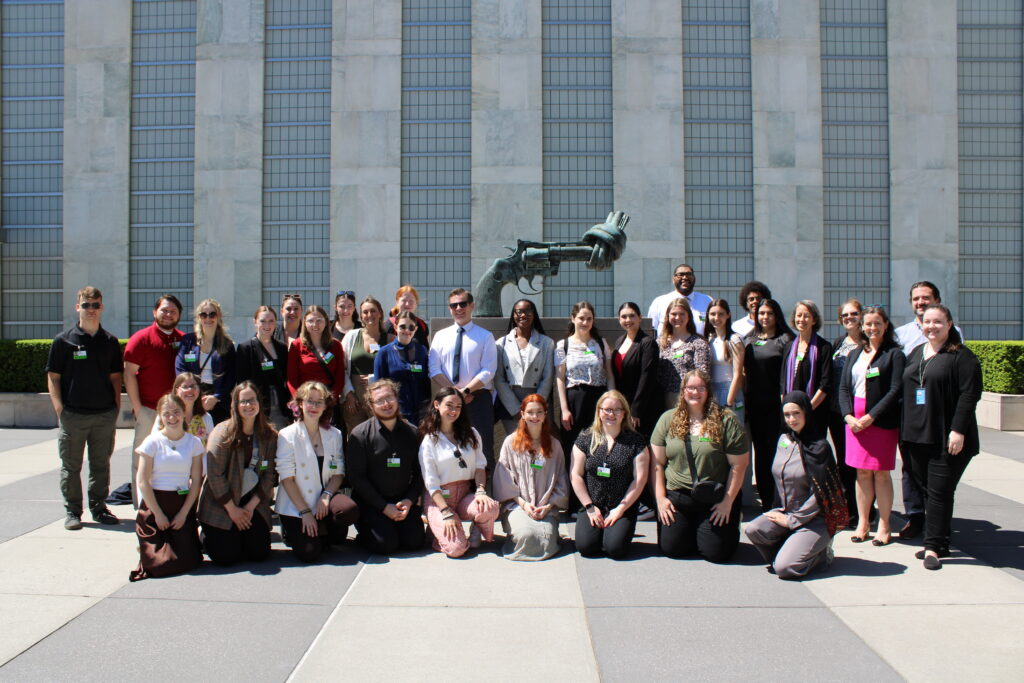
I was a member of the fifth MELF cohort, following in the footsteps of dozens of other Mercy women from around the globe. Last fall, the nine of us from Colombia, Guyana, Ireland, Kenya, New Zealand, the Philippines, Tonga, and the United States met for the first time in-person in Siem Reap, Cambodia, where we witnessed Mercy in action at the heart of war, peace, and reconciliation. In March, we reconvened at the Commission on the Status of Women in New York, learning from Cecilie Kern and the work of Mercy at the UN. Finally, we concluded our time together in Dublin, presenting our unique justice projects from our own contexts, reflecting on the future of Mercy where it all began in Coolock and on Baggot Street, and resolving for this to be the beginning of more collaboration across the Mercy world.
Our projects ranged from creative leadership development in the Philippines to support of women and children in New Zealand to environmental education in Kenya and more. Every single fellow focused her efforts on a vulnerable population such as immigrants, elders, or youth, and, in the spirit of Catherine McAuley, worked in the local context to pull levers of influence and power to offer care and compassion. I was honored to present the work of the Mercy Justice Team in this current iteration of politics in the United States, illustrating the ways our sisters, associates, and ministries truly live out Mercy values and the Critical Concerns at this point in history.
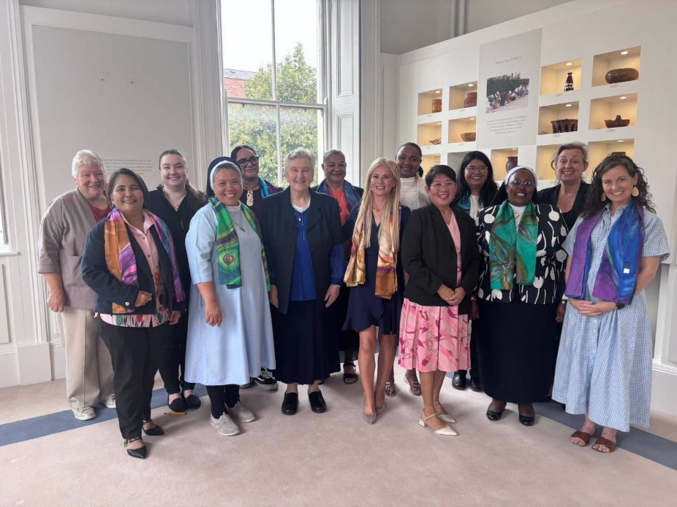
More than anything else, this experience has strengthened my resolve to make the extra effort to connect across institutes and time zones. It is an immense gift to be part of the Mercy world and the way it adapts and serves in localities far from the red door in Dublin. While our justice work necessarily looks different around the world, the grounding in Mercy values and the commitment to making the world better today than yesterday connects us to the ministry and to one another. We all have something to learn from one another to continue Catherine’s vision and, in a world in dire need of justice and mercy, we also have a responsibility to offer it wherever we are.
Article Archive
2026
October
Critical Considerations:
USCCB economic letter still guides voters
MELF cohort closes by sharing gifts in Dublin
September
Critical Considerations:
Nonviolent civil resistance and the 3½%
My life as a sister and Justice Team member
August
Critical Considerations:
Moral courage or moral cowardice?
A day in the life: a sister on the Mercy Justice Team
July
Critical Considerations:
Are contradictions determining U.S. elections?
Ecumenical Advocacy Days as a first timer
June
Critical Considerations:
What does habeas corpus have to do with immigration?
Nutrition assistance and the Farm Bill
Guns, Pride, Juneteenth, and the Emanuel 9
May
Critical Considerations:
Has Eisenhower’s worst nightmare come true?
The nonviolent struggle in Peru (español)
Report on global fossil fuel transition conference
Catholic high school visits Casa Misericordia and Sister Mary Waskowiak
April
The dangers of ending TPS for Haiti
Santa Marta conference on fossil fuel transition
Voting: How we know voter fraud in the U.S. is very rare
U.N. Commission on the Status of Women
March
Voting: Threats to this fundamental right in democracies
Nurturing Justice and Living Faith
Permitting reform and extractivism
High School student’s reflection on advocacy immersion in Washington, D.C.
February
Critical Considerations:
We have a choice: oligarchy or democracy?
Critical Concerns in Focus: Immigration (español)
Names and naming make a difference in perceptions of reality
January
Critical Considerations:
(click years to expand)
2025
December
The Catholic Church responds to the threat of authoritarianism
Critical Considerations:
The United States: global citizen or global pariah?
November
Critical Considerations:
NSPM-7: Countering or perpetrating political violence?
Advocating on harms of extractive industries
Argentina y el avance del colonialismo / Argentina and the advance of colonialism
October
Critical Considerations:
Is it time to reform the Insurrection Act?
COP 30 in the Amazon & Raising Hope in Rome
The dangers of falsely linking Tylenol to autism
September
Mercy sisters call for urgent defense of immigrants
Critical Considerations:
What is Posse Comitatus all about?
Everyday pilgrimages: the Earth is the Lord’s
August
Critical Considerations:
Are we doomed to a perpetual nuclear arms race?
Love and care of creation in local ecologies
Church document ahead of COP30
July
Critical Considerations:
What’s at stake in Israel’s destruction of Gaza?
Have you heard of Black August?
DEI—Diversity, Equity, and Inclusion
Mercy Life Gathering in Panama
June
Vampires, Sharecropping, and the Real History of Juneteenth
Protecting Children and Vulnerable Adults from Abuse in the Philippines
Critical Considerations:
What’s really driving border enforcement?
May
Critical Considerations:
April
Critical Considerations:
Water extractivism in Palestine
March
Critical Considerations:
Who benefits from tax cuts? Who pays?
NETWORK webinar on U.S. federal policy
February
National declaration of emergency in Bajo Aguán
Critical Considerations:
Has the United States declared war on immigrants?
January
If you make a mess, clean it up! (Advocacy success in NY)
Youth claim climate victory in Montana court
Critical Considerations:
2024
December
Critical Considerations:
Is the United States becoming a plutocracy?
November
Critical Considerations:
What happened on November 5, 2024?
October
Overturning the Chevron deference
Critical Considerations:
Who are the Israeli settlers and what motivates them?
Assassination of Honduran water protector deeply grieves Sisters of Mercy
September
God walks with his people: National Migration Week September 23–29
Critical Considerations:
What does CEO compensation say about corporate priorities?
Anxiety – election season can heighten it!
August
Critical Considerations:
What is Project 2025 all about?
Working to stop weapon exports to Haiti
Participating in Elections, part 2
July
Critical Considerations:
Is there a better way to spend $91 billion?
Education, Agriculture, & Emigration in the Philippines
Participating in Elections, part 1
June
Critical Considerations:
Are we creating a prison-industrial complex?
Mercy student videos address the Critical Concerns
May
Critical Considerations:
Degrowth is the only sane survival plan
Argentina and the government of hate
Listening to a chorus of voices
April
Critical Considerations:
An Israeli Jesuit reflects on war in the Holy Land
Advocacy Success! Expanded Background Checks for Gun Sales
March
Military spending and national (in)security
February
The challenge Gaza war presents for American Jews
January
Gaza war threatens credibility of West’s commitment to human rights and the rule of law
2023
December
Climate Summit fails to adequately respond to gravity of climate crisis
November
Critical Considerations:
The dangers of conflating Anti-Zionism and Antisemitism
Red flag laws in jeopardy: faith voices speak to save them
October
Jewish and Palestinian perspectives on Gaza crisis
September
U.S. China tensions impact efforts to address climate change
August
When Good Economic Policy Isn’t Enough
July
States Move to Weaken Protections for Child Workers
June
Corporate Lobbyists at Climate Talks
May
Electric Vehicle Transition Challenges
April
Repudiating the Doctrine of Discovery
March
February
The Rise of Christian Nationalism
January
2022
December
How Corporations Took Over the Government
November
The Independent State Legislature Theory Explained
October
Mercy Justice Team
Team Members
Marianne Comfort
Director
Sr. Sue Gallagher, RSM
Program Coordinator
Angie Howard-McParland
Program Coordinator
John Charles McAllister-Ashley
Program Support & Operations Specialist
Mike Poulin
State Advocacy & Program Manager
Br. Ryan W. Roberts, OLF
Data & Knowledge Coordinator
Jean Stokan
Federal Advocacy Coordinator:
Immigration & Nonviolence
Sr. Rose Marie Tresp, RSM
Program Coordinator
(vacant)
Federal Advocacy Coordinator:
Anti-racism, Earth, & Women
(vacant)
Communications Coordinator
Local Justice News & Upcoming Events
Justice Resources & Links
Mercy Justice Resource Pages
- Voter Reflection Guide (updated September 2026)
- Resources for Immigrants
- Advocacy Amplified! (Mercy Justice Videos on advocacy tools)
- Mercy Walks with Migrants (interviews with Mercy sisters on immigration work)
- Mercy Tips to Care for the Earth
Photo Galleries
Spirituality Integration Resource for Justice (SIRJ)
Nurturing Justice and Living Faith / Fomentar la justicia y la fe viva
LCWR 100 Days of Prayer, Fasting, & Advocacy
- Labor Day 2025 (Español) (01 September 2025)
- Black Friday 2025 (Español) (28 November 2025)
- Michaelmas 2026 (Español) (29 September 2026)